
Andy Wingo


Andy Wingo
regarding avx512, it could be only a subset of features; https://github.com/openssl/openssl/commit/79337628702dc5ff5570f02d6b92eeb02a310e18
Here's some more docs on how haswell and broadwell behave: https://en.wikichip.org/wiki/intel/frequency_behavior#Base.2C_Non-AVX_Turbo.2C_and_AVX_Turbo
I guess I am mixing the two things: the frequency throttling, and the transition latency. All Xeon chips since E5 v3 I think have different base frequencies when executing AVX2...
Althernately, as "light" AVX2 instructions seem to run at full rate on Skylake and later, perhaps we limit them to that processor family -- i.e. disable on Haswell.
Documentation for turbo bins on Xeon E5 servers: https://www.intel.com/content/dam/www/public/us/en/documents/specification-updates/xeon-e5-v3-spec-update.pdf For the machines in Igalia's lab (2x E5-2620 v3), some excerpts from those charts here: 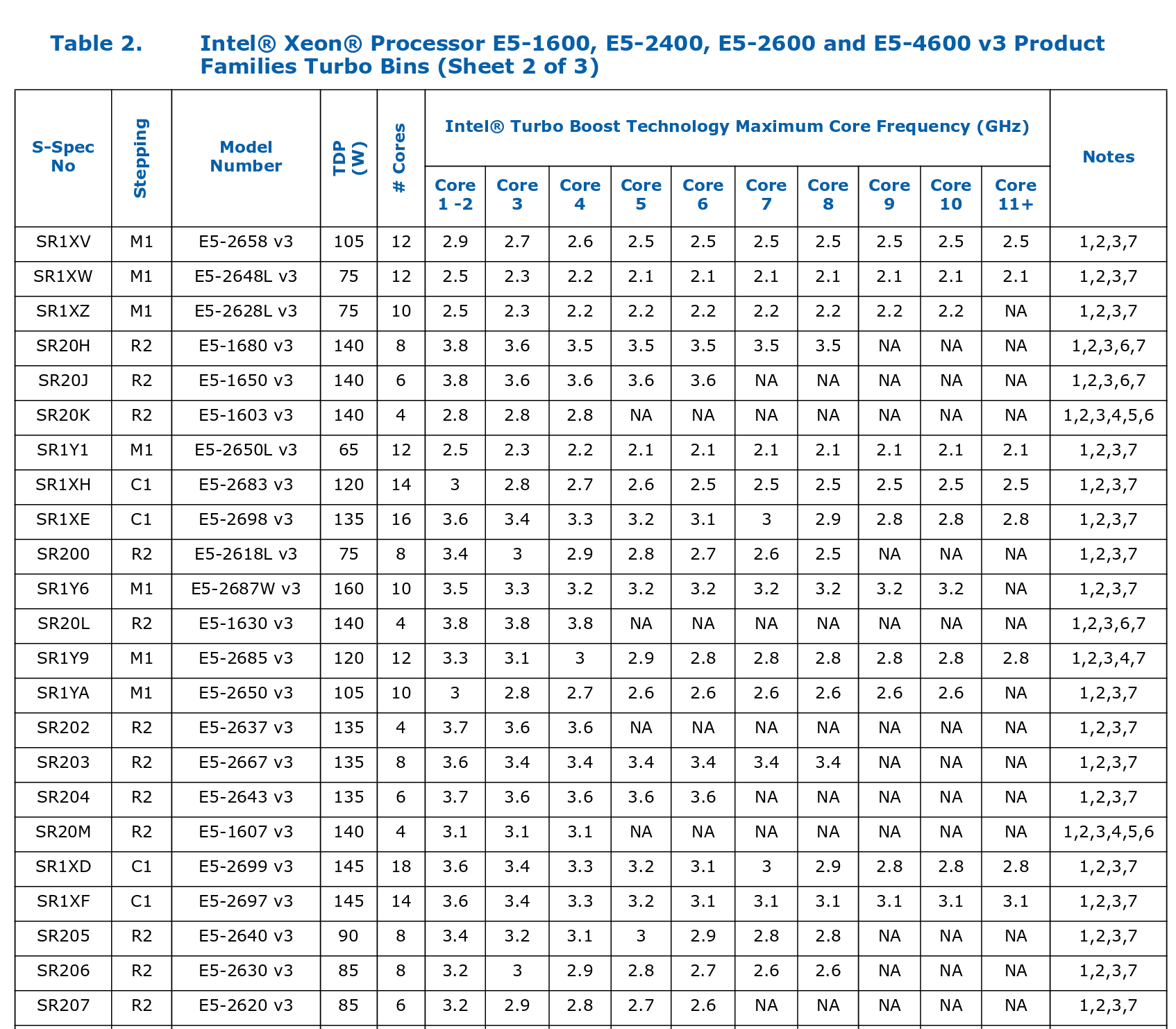 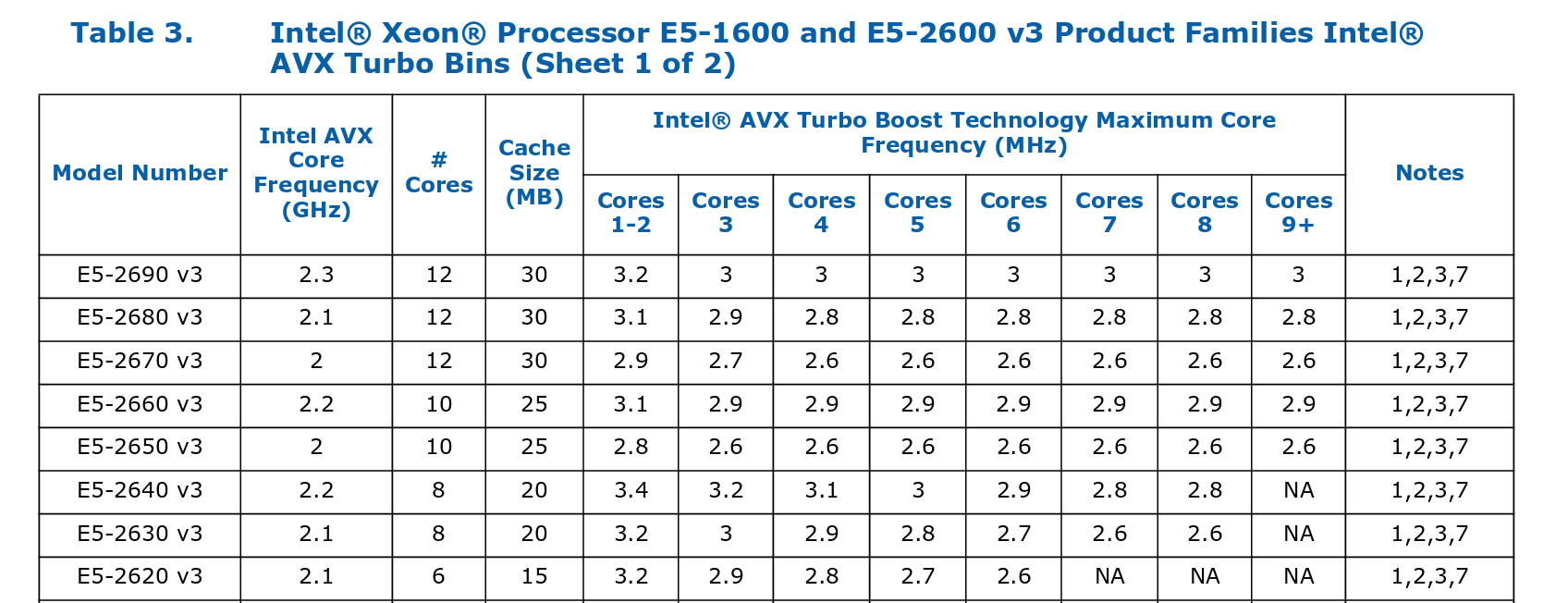 Interestingly for this SKU,...
For me I have two questions: (1) Should we recommend that turbo boost be enabled? In what circumstances? (2) Should we back off from YMM (256-bit) register use in Snabb...
Regarding turbo boost -- I think that if you want the highest possible performance, you should enable it. If only one core is active, your perf boost could be up...
Incidentally here's a better link on how to understand haswell turbo bins: https://www.microway.com/knowledge-center-articles/detailed-specifications-intel-xeon-e5-2600v3-haswell-ep-processors/ From that page, all-core frequency ranges: 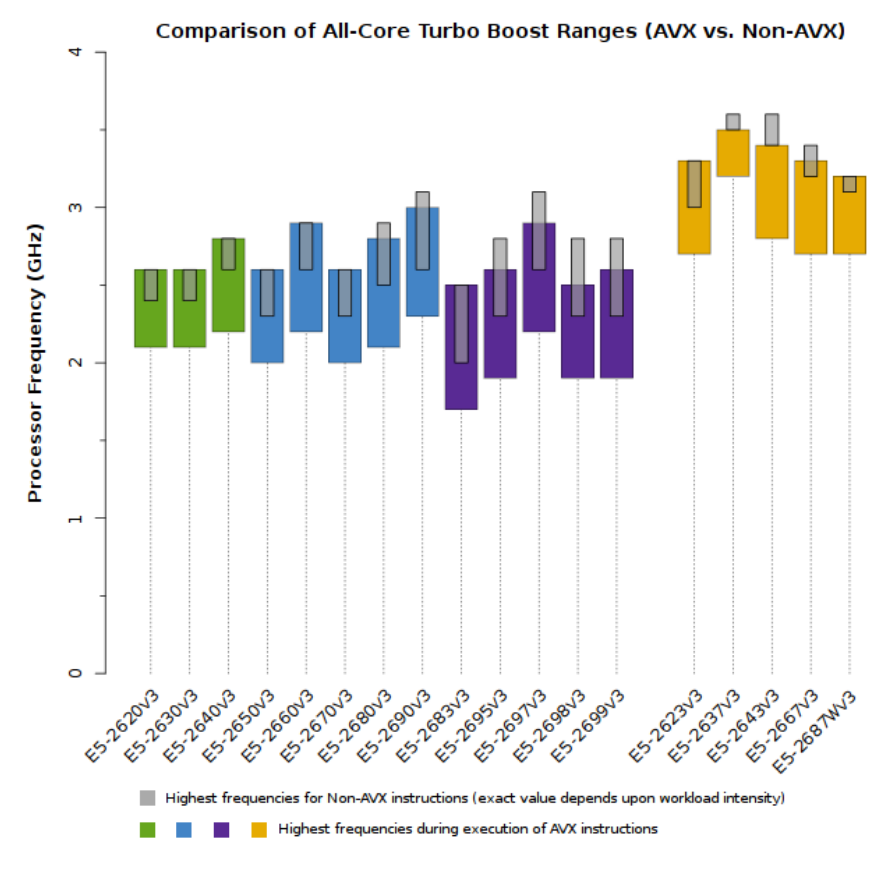 Frequency ranges with a single core active: 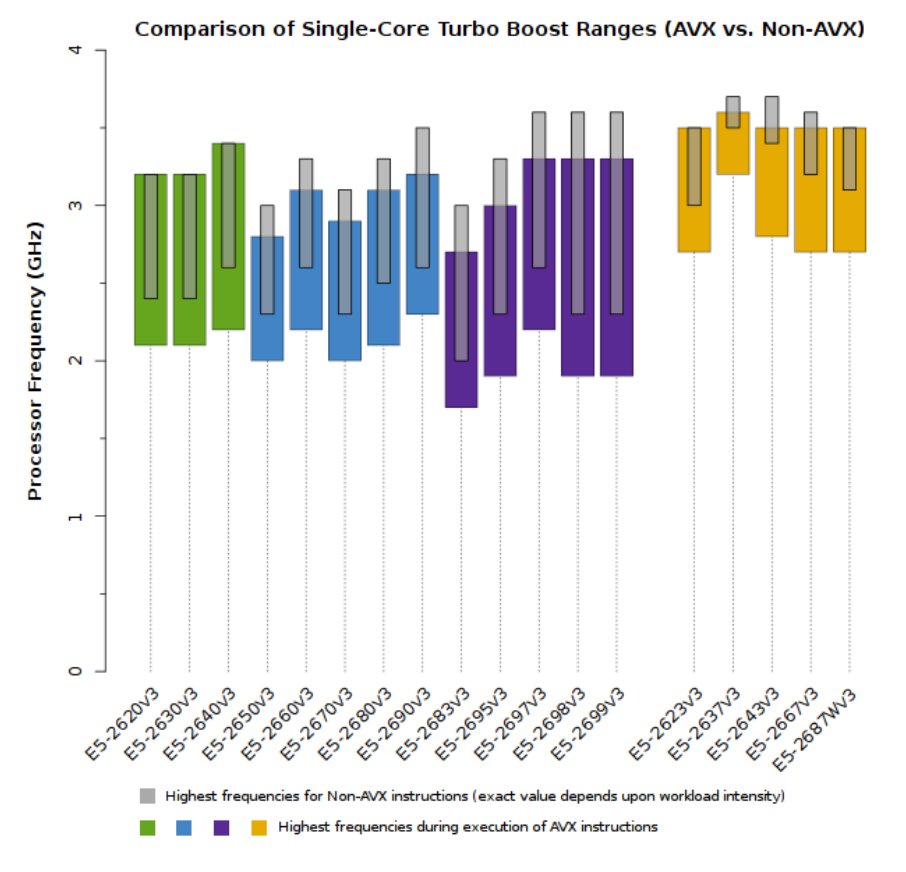 Comparison for...
An HPC-flavor review of Skylake, Broadwell, and Haswell, with attention to turbo boost: https://indico.cern.ch/event/668301/contributions/2732540/attachments/1572581/2485483/TurboBoostUpAVXClockDownPrelim.pdf
In an absolutely bonkers perplexing result -- I don't see any downclocking when running AVX2 without turbo boost on our servers. Measured by looking at /proc/cpuinfo. Granted, only one core...