

 square
Add parquet-specific dataset IO for reduced memory usage
Currently, blocks.assemble expects all datafile frames to be in memory simultaneously for merging
https://github.com/square/blocks/blob/5a19b13dfb67c659177058a96e19b5d785449a71/blocks/core.py#L77
Unfortunately, there are some platform-dependent memory allocation issues that are likely out of blocks' control where Linux requires 2x the expected memory for blocks.assemble (see attached profiling).
One idea is to add a mode to blocks.assemble that would only hold two frames in memory at once (the partially assembled one and the next datafile frame to merge). It's unclear if this would work around the underlying memory allocation issue on Linux, but could be worth a shot and would generally improve memory usage.
Memory profile assembling 15 GB of data on Mac
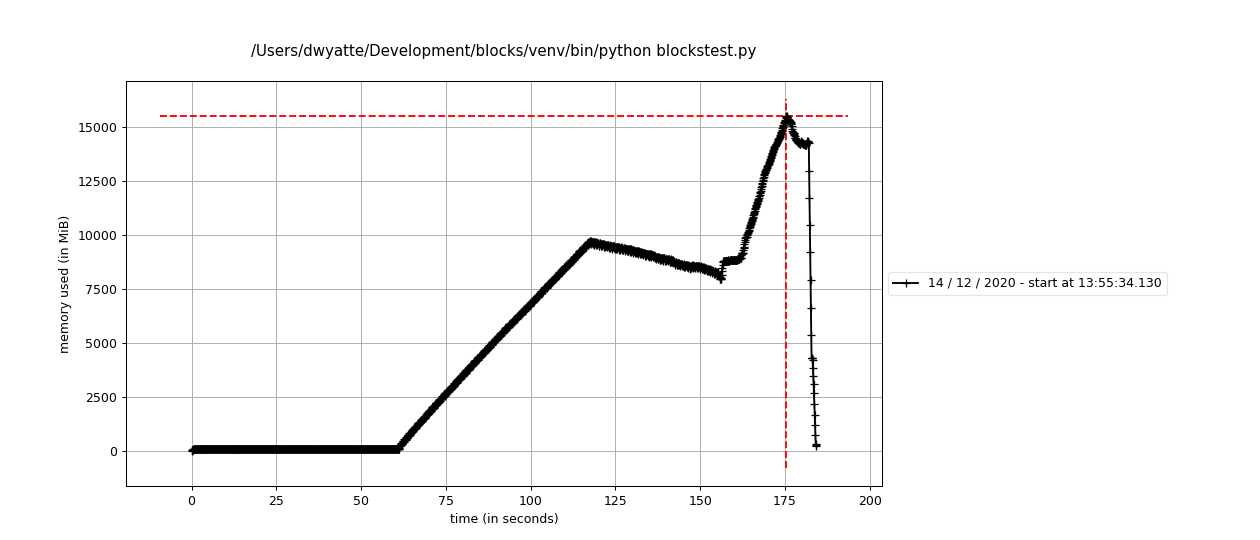
Line #    Mem usage    Increment  Occurences   Line Contents
============================================================
    30   86.297 MiB   86.297 MiB           1   @profile
    31                                         def assemble(
    32                                             path: str,
    33                                             cgroups: Optional[Sequence[cgroup]] = None,
    34                                             rgroups: Optional[Sequence[rgroup]] = None,
    35                                             read_args: Any = {},
    36                                             cgroup_args: Dict[cgroup, Any] = {},
    37                                             merge: str = "inner",
    38                                             filesystem: FileSystem = GCSFileSystem(),
    39                                         ) -> pd.DataFrame:
    74   86.438 MiB    0.141 MiB           1       grouped = _collect(path, cgroups, rgroups, filesystem)
    75
    76                                             # ----------------------------------------
    77                                             # Concatenate all rgroups
    78                                             # ----------------------------------------
    79   86.438 MiB    0.000 MiB           1       frames = []
    80
    81  731.676 MiB -3327.988 MiB           2       for group in grouped:
    82   86.438 MiB    0.000 MiB           1           datafiles = grouped[group]
    83   86.438 MiB    0.000 MiB           1           args = read_args.copy()
    84   86.438 MiB    0.000 MiB           1           if group in cgroup_args:
    85                                                     args.update(cgroup_args[group])
    86 4059.664 MiB -184418.691 MiB         403           frames.append(pd.concat(read_df(d, **args) for d in datafiles))
    87
    88                                             # ----------------------------------------
    89                                             # Merge all cgroups
    90                                             # ----------------------------------------
    91  731.691 MiB    0.016 MiB           1       df = _merge_all(frames, merge=merge)
    92
    93                                             # ----------------------------------------
    94                                             # Delete temporary files
    95                                             # ----------------------------------------
    96  731.746 MiB    0.016 MiB         201       for file in datafiles:
    97  731.746 MiB    0.039 MiB         200           if hasattr(file.handle, "name"):
    98                                                     tmp_file_path = file.handle.name
    99                                                     if os.path.exists(tmp_file_path):
   100                                                         os.remove(file.handle.name)
   101  731.754 MiB    0.008 MiB           1       return df
Memory profile assembling 15 GB of data on Linux
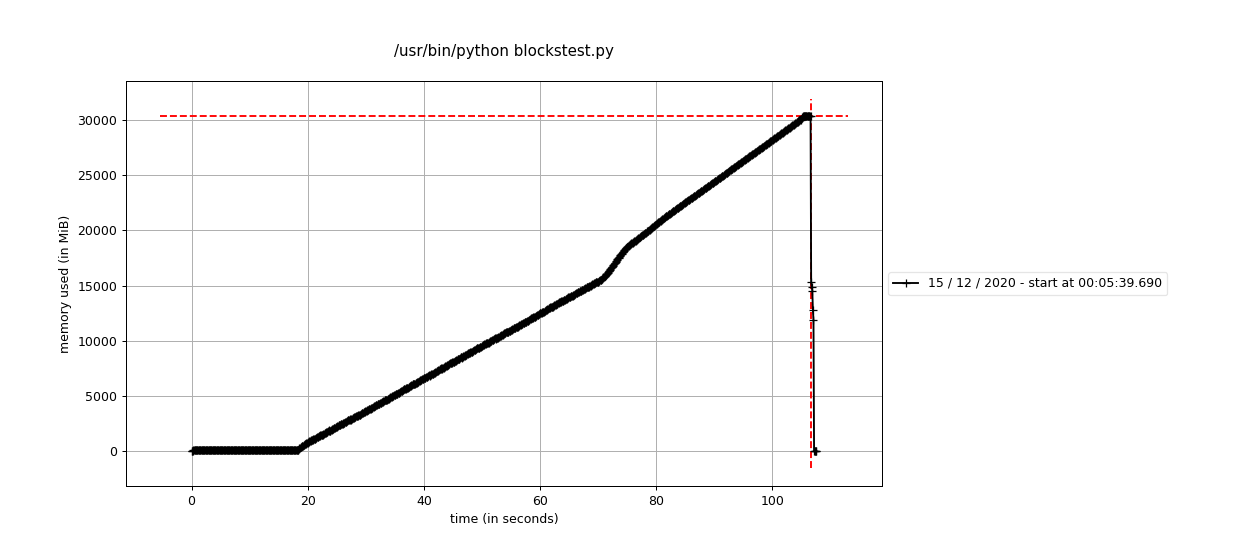
Line #    Mem usage    Increment  Occurences   Line Contents
============================================================
    30  104.570 MiB  104.570 MiB           1   @profile
    31                                         def assemble(
    32                                             path: str,
    33                                             cgroups: Optional[Sequence[cgroup]] = None,
    34                                             rgroups: Optional[Sequence[rgroup]] = None,
    35                                             read_args: Any = {},
    36                                             cgroup_args: Dict[cgroup, Any] = {},
    37                                             merge: str = "inner",
    38                                             filesystem: FileSystem = GCSFileSystem(),
    39                                         ) -> pd.DataFrame:
    74  104.805 MiB    0.234 MiB           1       grouped = _collect(path, cgroups, rgroups, filesystem)
    75
    76                                             # ----------------------------------------
    77                                             # Concatenate all rgroups
    78                                             # ----------------------------------------
    79  104.805 MiB    0.000 MiB           1       frames = []
    80
    81 30356.867 MiB    0.000 MiB           2       for group in grouped:
    82  104.805 MiB    0.000 MiB           1           datafiles = grouped[group]
    83  104.805 MiB    0.000 MiB           1           args = read_args.copy()
    84  104.805 MiB    0.000 MiB           1           if group in cgroup_args:
    85                                                     args.update(cgroup_args[group])
    86 30356.867 MiB 30248.691 MiB         403           frames.append(pd.concat(read_df(d, **args) for d in datafiles))
    87
    88                                             # ----------------------------------------
    89                                             # Merge all cgroups
    90                                             # ----------------------------------------
    91 30356.867 MiB    0.000 MiB           1       df = _merge_all(frames, merge=merge)
    92
    93                                             # ----------------------------------------
    94                                             # Delete temporary files
    95                                             # ----------------------------------------
    96 30356.867 MiB    0.000 MiB         201       for file in datafiles:
    97 30356.867 MiB    0.000 MiB         200           if hasattr(file.handle, "name"):
    98                                                     tmp_file_path = file.handle.name
    99                                                     if os.path.exists(tmp_file_path):
   100                                                         os.remove(file.handle.name)
   101 30356.867 MiB    0.000 MiB           1       return df

After digging in, I think blocks is doing the optimal thing here by reading all datafile frames into a list and then concatenating. Pandas will always require 2x memory when concatenating two dataframes since it needs to allocate a new dataframe of size df1 + df2, so while I don't quite understand the OS discrepancy, at least it handles this via a single concat operation instead of incrementally.
That said, while digging in, I discovered various parquet libraries support optimized concatenation using dataset-level metadata so blocks could potentially exploit this information to reduce memory usage. For example, fastparquet pre-allocates the dataframe and writes directly to it to avoid copy operations (pyarrow doesn't do this for some reason so still requires 2x memory, but is much faster than blocks' naive pandas-based concatenation).
One idea is for blocks to define read_dataset handlers for various storage formats with a fallback to read_df that uses the current logic if read_dataset is undefined for a storage format or if the files use heterogeneous storage formats. Updating this issue as a feature request for this.